
WHO WE SERVE
The Char People, I call them the “Children of Bay Bengal”
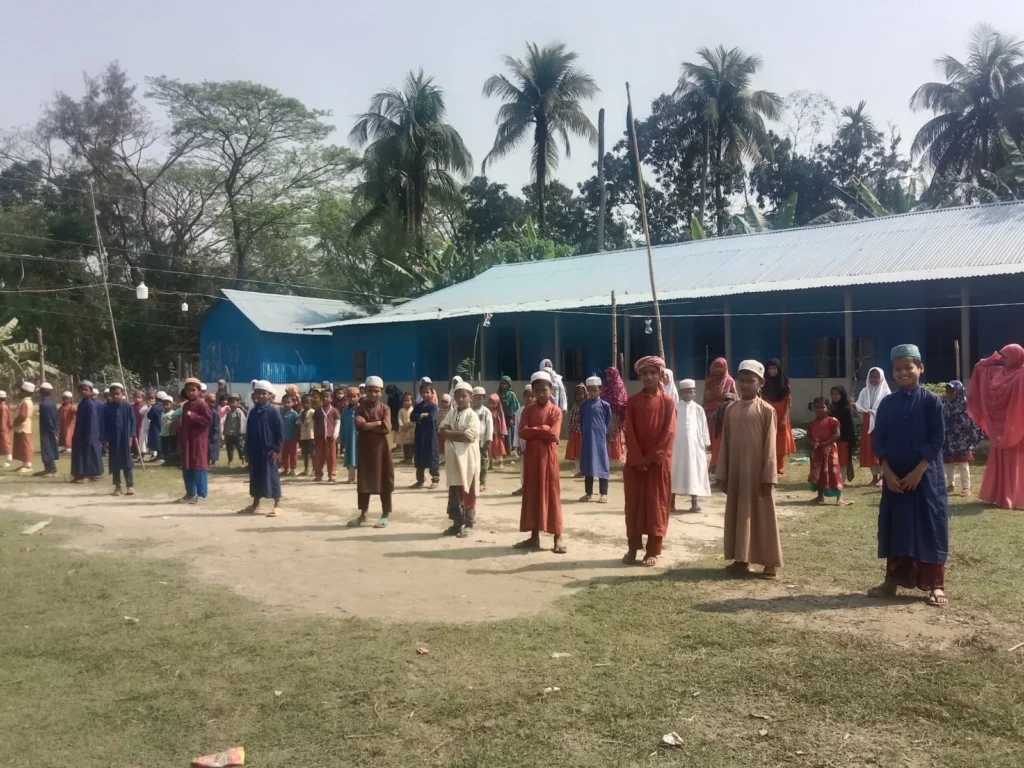
KEHSF serves a special community in Bangladesh known as the “Char People.” The Bengali word “Char” refers to small river or coastal islands formed by silt deposits. These islands often shift locations over time due to floods and river movements. Even after attaching to the mainland, these regions continue to be called Char areas.
The Char People face severe environmental challenges, poverty, and limited access to education, healthcare, and employment opportunities. Many are unfairly stereotyped because of their difficult living conditions and lack of resources.
KEHSF is committed to empowering these underserved communities through education, vocational training, and sustainable development opportunities, helping them build a better and more secure future.
FOUNDER’S TESTIMONIAL:
I CALL THEM “CHILDREN OF BAY OF BENGAL”
Born in the early 1950s, I grew up near them — only 20 or perhaps 30 miles apart. I was living in Noakhali city, in the comfort and safety of a secure home, enjoying all the privileges of city life. I attended the best schools, later moved to the capital city to study at the country’s finest university, and eventually traveled even farther, to the USA, in pursuit of higher education.
They, however, lived out in the open, surrounded by endless stretches of wetlands, with no neighbors nearby. There were no schools for their children, no roads to walk on, and no comforts of civilization. The state administration had sent them there with nothing but a couple of legal-sized papers — the deed to 2.5 acres of land. Empty-handed, without even a backpack of emergency supplies, they began their lives on the chars.
Yet they were not afraid. Their faith in God Almighty was unwavering, and they believed He alone would protect them. They married early, often into large families, adding more hands to help with the labor-intensive farming that sustained their lives.
To defend themselves against the Bay of Bengal, they built their homes high above the ground — at least three feet, though five feet was considered ideal. Around their homesteads, which covered about half an acre, they raised thick mud walls as protective barriers. Along these boundaries, they planted rows of fast-growing banana trees, eight to ten feet tall, forming a final line of defense against the sea.
But before long, the inevitable arrived. The Bay of Bengal unleashed its fury in the form of the Great Cyclone — the Bhola Cyclone of 1970. With a monstrous thirty-foot tidal surge, the waters swept into their isolated homes and carried away everything: people, livestock, belongings — nothing was spared. No one truly knows how many lives were lost, but estimates suggest that nearly a million people disappeared into the belly of the Bay of Bengal.
And yet, the sea showed mercy to some, as though they were its own beloved children. A few survived, left behind to begin a new generation of char people. Decades have passed since then, and today their population has once again grown into the millions.
The Bay of Bengal still visits them several times each year — a haunting reminder of 1970, and perhaps its own strange way of saying that it still remembers them, still claims them, still loves them.
And now, as I finally approached them — after generations of distance, my family having lived abroad since the time of their parents and grandparents — they looked at me as though they had always known me.
They asked softly:
“Where have you been all this time?”